

Why fabric Width Matters & Why Not All Handwoven Fabrics Are the Same
a new chapter of traditionally handwoven fabrics, connecting earth and divine through expanded form.
Our new Axis Collection has been quietly brewing for over a year.
This wasn’t simply about launching a new artisan fabric collection. It was in response to honest conversations with our valued community of interior designers and makers who loved the depth and integrity of our handwoven textiles but needed greater width for upholstery and large-scale interior projects.
The Axis Collection offers wide-width handwoven fabrics up to 150cm, designed specifically for contemporary interiors while remaining entirely artisan-crafted.
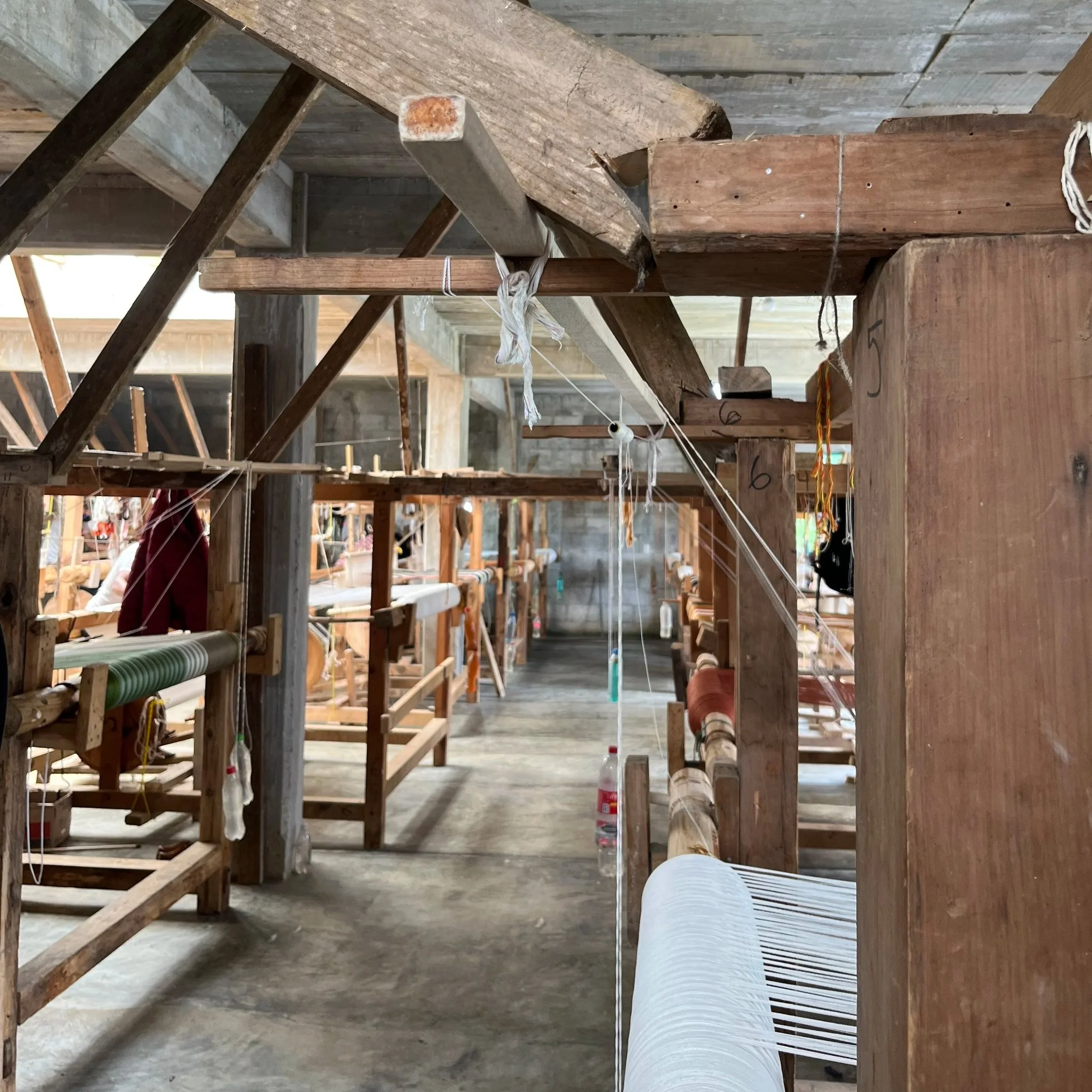
Pedal Looms, Larrainzar, Mexico
Where It Began: The Backstrap Loom
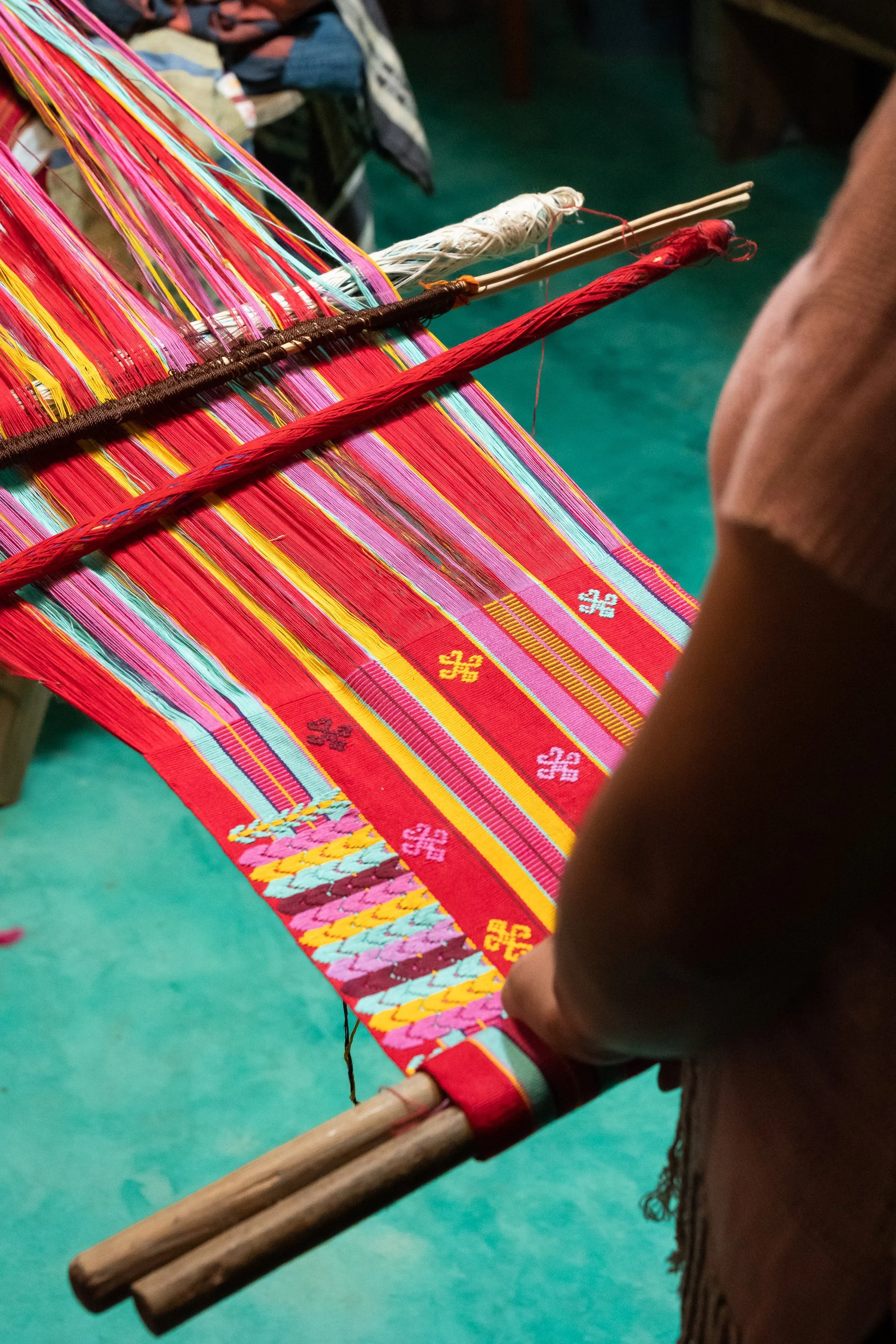
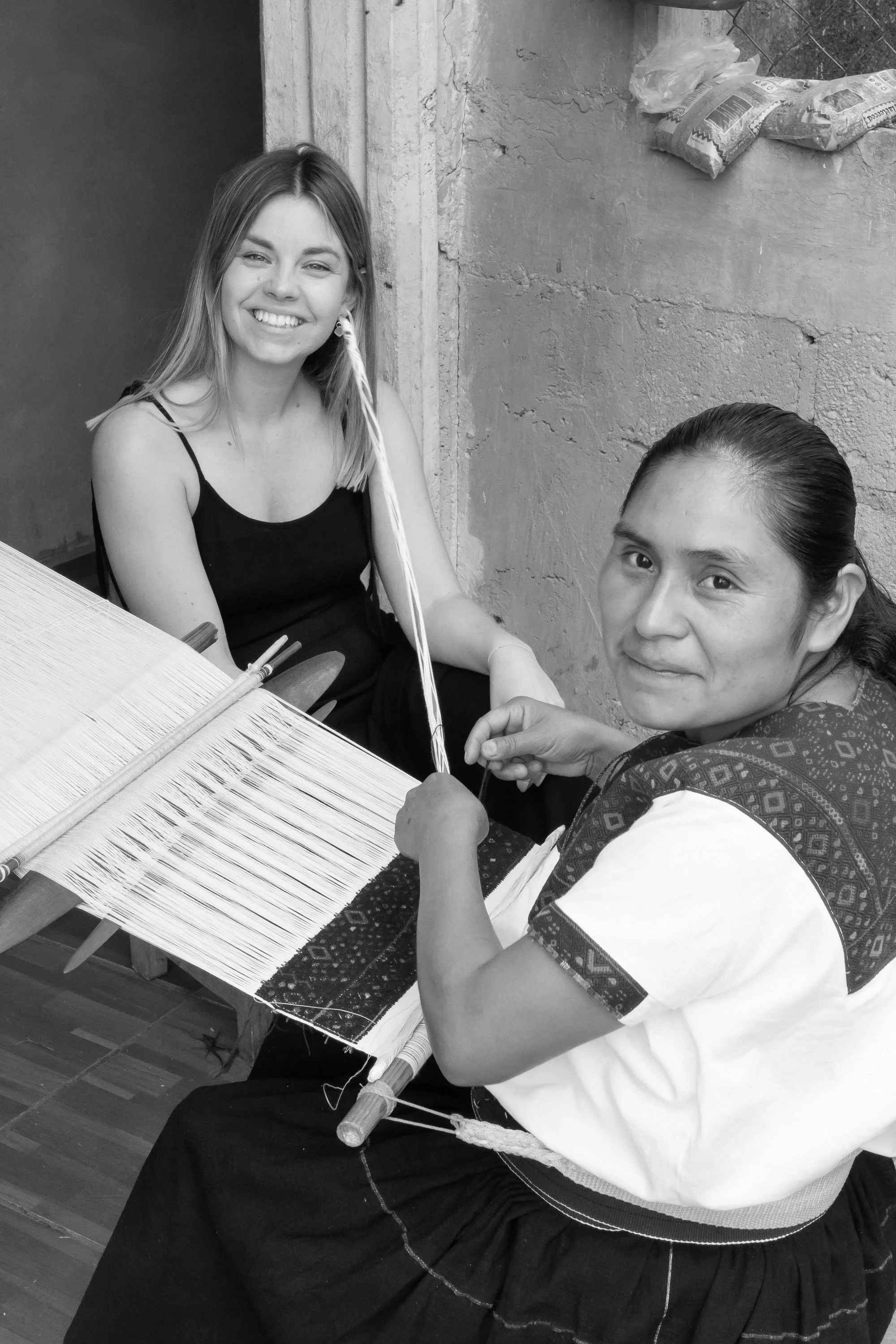
My first artisanal fabrics were woven on the backstrap loom, one of the most ancient weaving techniques in existence, dating back over 6,000 years.
This traditional loom is worn around the weaver’s back. The tension comes from the body itself. Each thread is manually lifted and passed through in a slow, sacred process that has remained largely unchanged for millennia.
Traditionally, backstrap looms weave to a maximum width of around 50cm.
A 50cm x 50cm striped textile on a backstrap loom typically takes 30–40 hours to weave, depending on complexity.
Time creates luxury.
Backstrap fabrics are dense, incredibly durable and rich in cultural symbolism. These heirloom-quality textiles are ideal for decorative panels, statement cushions, textile art and trim but the narrow width can make them less practical for full-scale upholstery projects.
The Pedal Loom: Artisan Efficiency Without Industrialisation
Later, I began working with pedal looms in Mexico and Guatemala.
These larger wooden looms use foot pedals to lift and separate the warp threads, allowing a wooden shuttle to pass through more efficiently. The fabrics are still entirely handwoven by our artisan partners but the weaving process is significantly faster.
The same 50cm x 50cm striped textile that takes 35 hours on a backstrap loom typically takes 6–10 hours on a pedal loom, depending on yarn and pattern.
The difference in weaving time directly impacts pricing and accessibility.
Pedal loom fabrics are lighter in weight yet remain durable, making them ideal for:
Handwoven upholstery fabric
Sustainable drapery fabric
Artisan cushions
Ethical interior accessories
They retain soul and story but with greater scalability for interior designers specifying luxury projects.
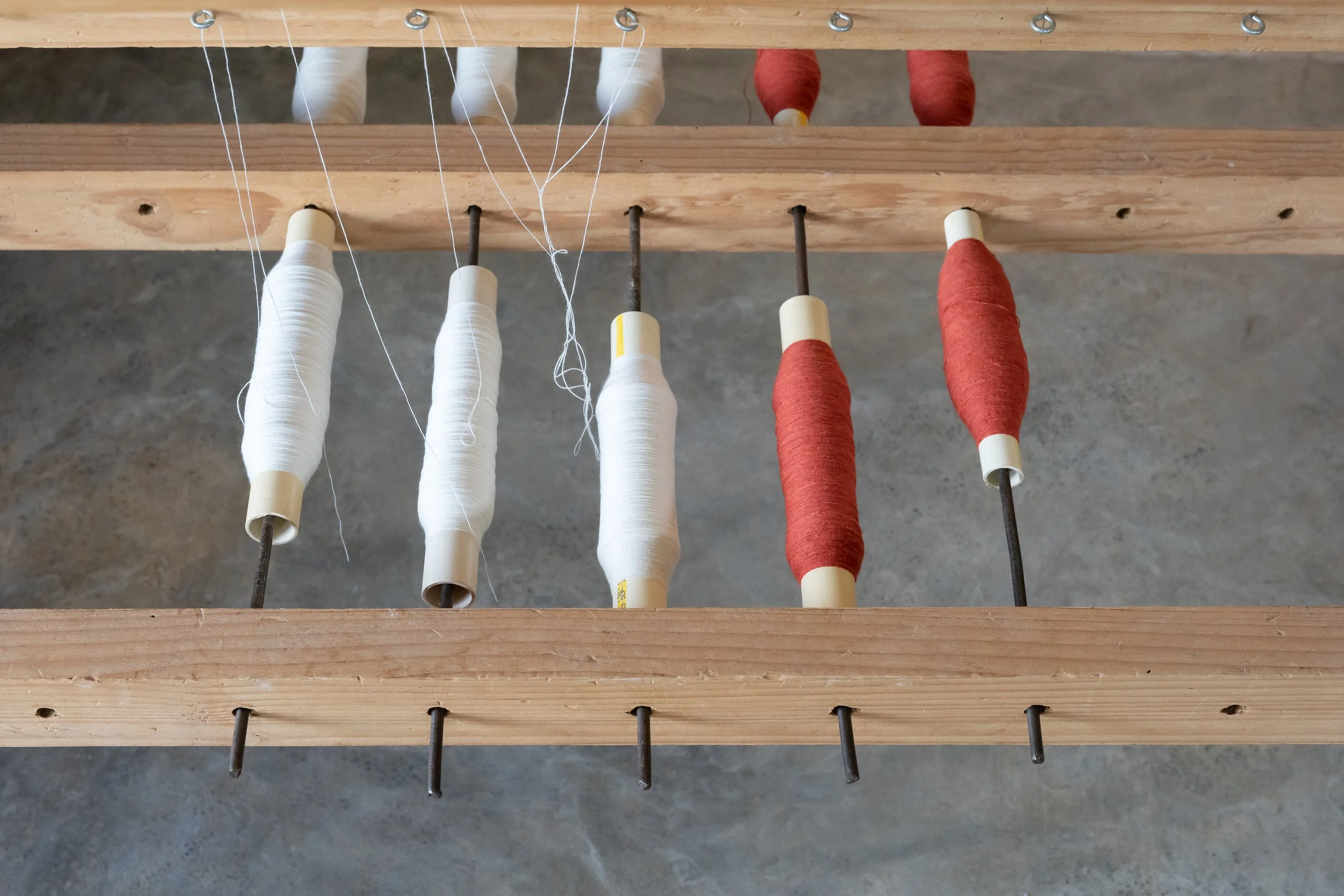
Pedal Loom, Mexico
The Width Evolution: From 50cm to 150cm
In Mexico, pedal looms allowed us to reach widths of 90cm.
But many designers needed more flexibility when sourcing handwoven fabric by the metre for sofas, headboards and larger upholstered pieces.
In Guatemala, traditional looms evolved to weave up to 150cm wide — a historical adaptation from when the region became a textile hub during the colonial era.
Wider widths.
Traditional techniques.
No industrial compromise.
By building long-term relationships with artisan weavers in San Pedro, we have been able to develop a collection of wide-width artisan textiles that honour traditional craftsmanship while meeting the practical needs of modern interior design.


Vereda Handwoven Fabric, Made on Pedal Loom
Why This Matters for Sustainable Interior Design
“Handwoven” is often used as a blanket term.
But not all handwoven fabrics are created in the same way.
When specifying artisan upholstery fabric or sustainable luxury textiles, it’s worth asking:
What loom was used?
How long did it take to weave?
Is it backstrap or pedal loom construction?
What tension system creates the cloth?
Is the value in speed — or in process?
Understanding how a textile is made transforms how we value it.
In my eyes, time is a true luxury.
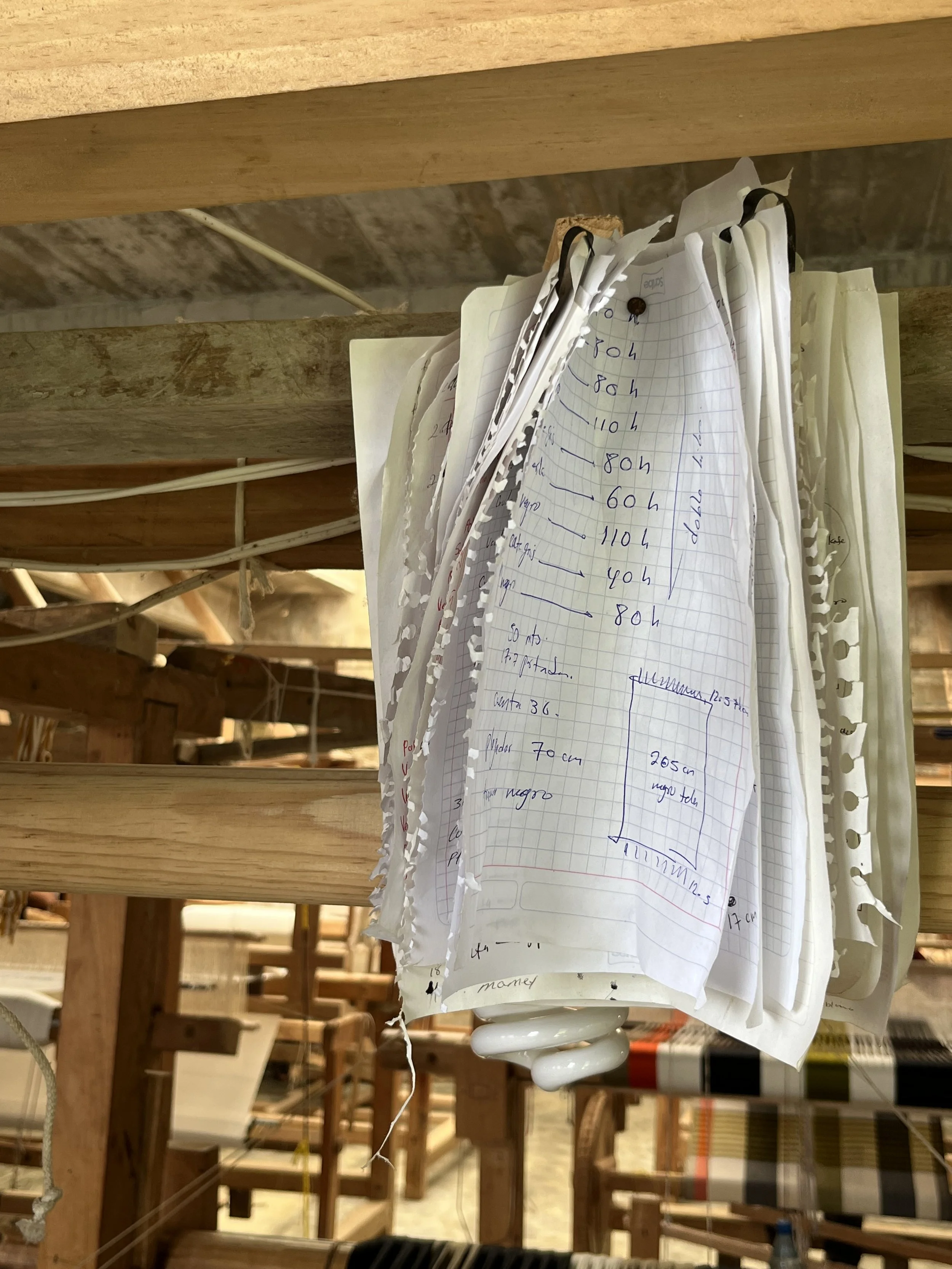
Fabric timing plans, pedal loom
The Axis Collection
Our Axis Collection of ethically made, handwoven fabrics offers widths of up to 150cm making it easier for interior designers to specify artisan textiles for upholstery without compromising on craftsmanship or sustainability.
Still handwoven.
Still story-rich.
Now designed for contemporary interiors.
Launching on the Spring Equinox
Friday 20th March
2026
